ANR MarmoCatch (2023/2027)
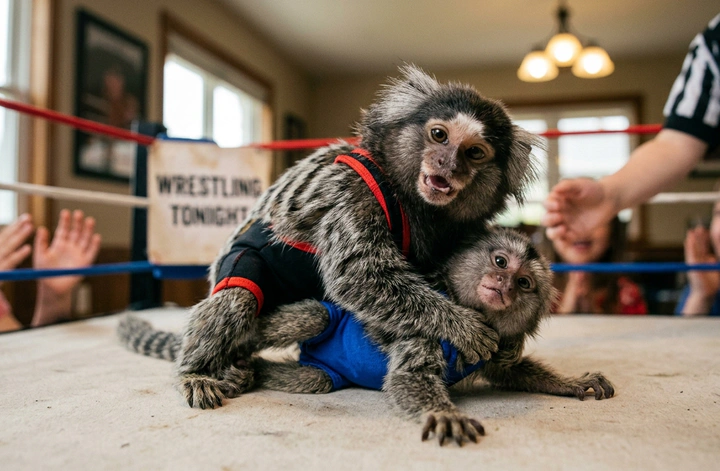
Under natural conditions, many animals perform interceptive movements to catch small prey (Shaw22 for a marmoset study). Such movements require the processing of several features of the prey, such as its size, orientation, and position, which are ultimately expressed into the coordinated control of the arm and hand during movement execution. Furthermore, in the case of a moving prey, catching movements must also take into account the highly dynamic and intricate nature of these visual features in order to precisely control the movement to catch at the appropriate location, orientation, and timing. This behaviour relies on the capacity of our brain to overcome the intrinsic neuronal delays in visual and motor systems to anticipate as accurately as possible the prey’s trajectory in the multiple features of interest. At the visual level, moving stimuli are known to induce predictions along their trajectory (Krekelberg01, Nijhawan08), yet with fewer neurophysiological (Jancke04, Guo07, Subramaniyan2018, Benvenuti21) or theoretical evidence (Grzywacz95, Perrinet12). At the motor level, neurons in motor and parietal cortex have been reported to be involved in the predictive control of interception movements that require a precise estimation of the movement time (Port01, Merchant04, Li22). However, how visual and motor predictive responses relate to one-another remains an open issue, even more so under naturalistic conditions in which several target features may (co-)vary in parallel. Our objective is to shed light on the mechanisms underlying the coordination between visual and motor cortices in the marmoset while it prepares and executes the grasp of a real physical target in complex motion.
Acknowledgement
This work was supported by ANR project “MarmoCatch” N° ANR-15-CE37-0011.

Laurent U Perrinet
Researcher in Computational Neuroscience
My research interests include Machine Learning and computational neuroscience applied to Vision.