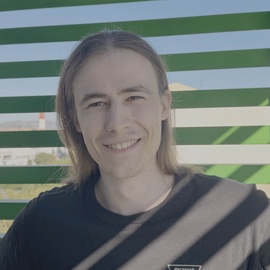
Arthur Bertin Barraud
Phd candidate in Neuroscience
CENTURI PhD Student (2026-10 / 2029-09): Neuromodulatory control of predictive processing in visual cortical circuits
- Thesis director: Dr. Ede Rancz, Mediterranean Institute of Neurobiology (INMED), Marseille
- Thesis co-director: Dr. Laurent Perrinet, Institut de Neurosciences de la Timone (INT)
- Full project description: CENTURI PHD2026-19 proposal, see also the announcement.
- This position is funded by the Turing Centre for Living Systems (CENTURI) PhD call.
Summary
The brain constantly generates internal models to predict sensory input, and perception arises from comparing these predictions with external reality—a process best understood as predictive processing. How this computation is implemented and regulated in cortical circuits remains unknown. This PhD project will explore how serotonin and norepinephrine—key modulators of mood, arousal, and attention—shape predictive processing in the mouse visual cortex.
The candidate will combine computational modelling (Perrinet lab, INT) and experimental neuroscience (Rancz lab, INMED) to link theory and physiology. Biologically realistic spiking and normative models will generate testable predictions, validated through in vivo electrophysiology, imaging, and optogenetic manipulation during sensory-motor mismatch tasks.
This iterative model–experiment approach will reveal how neuromodulators balance internal predictions with sensory evidence, providing insight into the healthy brain and a foundation for understanding its dysfunction in mental disorders.
Education
Master 2 Computational and Mathematical Biology (CMB), 2025-2026
- Institution: Aix-Marseille Université, Faculté des Sciences de Luminy; the programme is the Computational and Mathematical Biology track of the Master in Integrative Biology and Physiology, run with the Turing Centre for Living Systems (CENTURI).
- Result: ranked first of a cohort of 8 students, with an average of 16.415/20.
- Head of the master: Florence Hubert.
- Source: certificate issued on 2026-02-20 by the head of the master.
Phd candidate in Neuroscience, 2026
Aix-Marseille Université
M2 Computational and Mathematical Biology (CMB), Integrative Biology and Physiology (ranked 1st of 8, average 16.415/20), 2026
Aix-Marseille Université